
Holiday Party and Group Booking Calls: 7 Details to Capture Before a Manager Calls Back
Key Takeaways
- Seven details make one callback enough. Date, headcount, budget, space, food and drink, decision maker, and contact.
- Ask for ranges, not exact numbers. A headcount range and a budget frame beat a single guess.
- Capture is the low bar. A good phone agent checks your rules, drafts the offer and chases the follow-ups, and the manager approves.
- Keep the words straight. An inquiry is not a hold, and a hold is not a booking.
- You can start by hand this week. A printed card by every phone and one place where every inquiry goes.
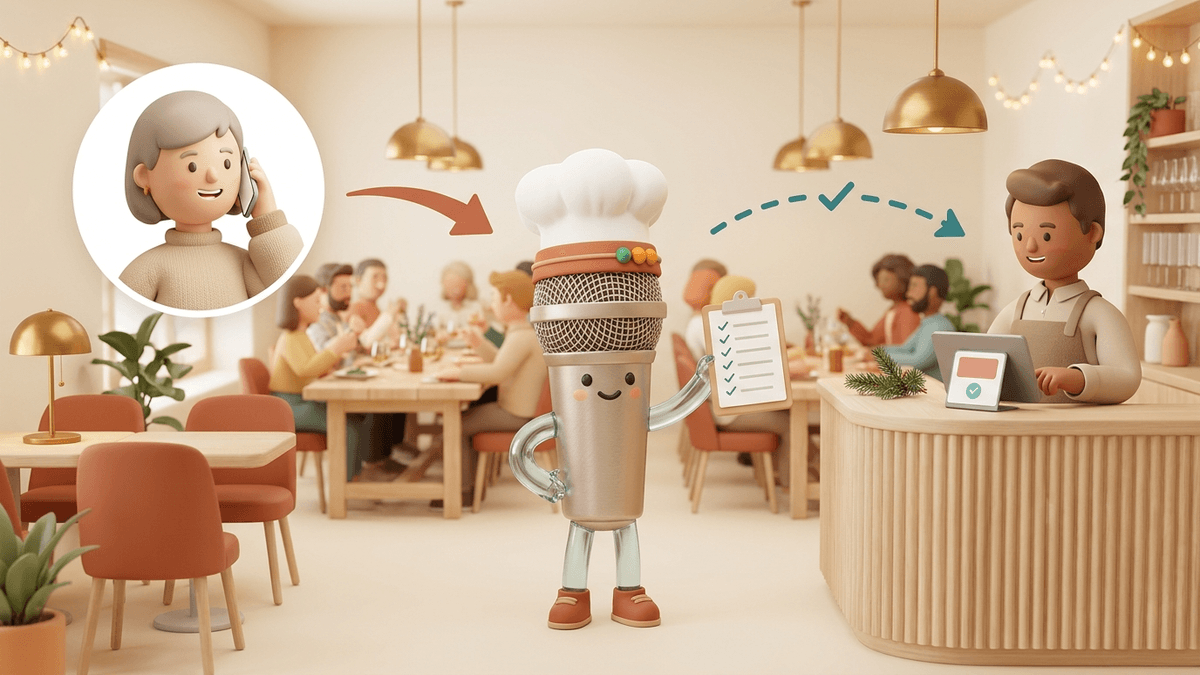
What should you ask someone calling to book a holiday party?
Ask for seven things before you hang up on a holiday party or private event call: the date and a backup, the headcount, the budget, the space or activity, food and drink needs including allergies, who decides and by when, and the best way to reach them. Then a manager can say yes or no in one callback.
A Thursday in December, and the phone rings
You know this call. A Thursday in early December. The bar is three deep. Someone grabs the phone on the fifth ring.
"Hi, I want to book a holiday party. About 30 people, next Friday."
Whoever answered writes "party, 30, Fri" and a phone number on the back of a ticket. Then a table needs drinks. The ticket goes next to the register.

The next afternoon, the events manager finds it. Which Friday? Dinner for thirty, or two hours of drinks and a game? Is there a budget? Is the back room already held that night?
The manager calls back and starts from zero. The caller is in meetings. Two days of voicemail later, they may have booked a venue that answered on the first call. Or nobody calls back, because the ticket went out with the receipts.
This is not a staff problem. The person who answered took a note while doing three other jobs. Nobody told them what the note needed to say.
Holiday season makes it worse because holiday party bookings bunch up. In a December 2024 survey of 173 HR and business leaders, Challenger, Gray & Christmas found 64% of companies were planning holiday celebrations. Not all of those parties happen at a venue. The ones that do call in the same few weeks, often during your busiest hours.
What are the 7 details to capture on group bookings and event inquiries?
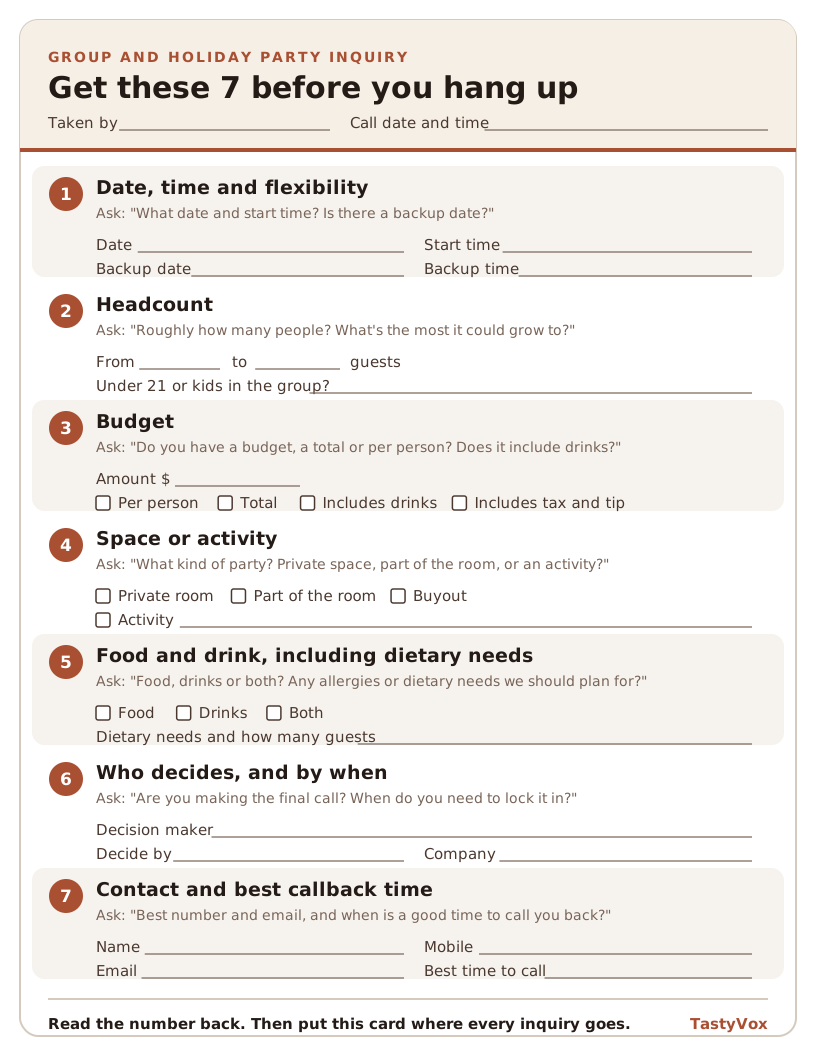
Capture these seven, and a manager can answer with a yes, a no, or "here is what works" in one callback.
- Date, time and flexibility. Ask: "What date and start time are you thinking, and is there a backup date that would also work?"
- Headcount. Ask: "Roughly how many people, and what is the most it could grow to?"
- Budget. Ask: "Do you have a budget in mind, as a total or per person, and does that include drinks?"
- Space or activity. Ask: "What kind of party is it, and do you want a private space, part of the room, or an activity for the group?"
- Food and drink, including dietary needs. Ask: "Do you want food, drinks or both, and does anyone have allergies or dietary needs we should plan for?"
- Who decides, and by when. Ask: "Are you the one making the final call, and when do you need to lock it in?"
- Contact and best callback time. Ask: "What is the best number and email for you, and when is a good time for our events lead to call?"
1. Date, time and flexibility
The date decides everything else. In December, your best Fridays and Saturdays may already be held. "Next Friday, but Thursday works too" is often a yes. One fixed date may be a no, and it is better to know that before anyone builds a proposal.
2. Headcount
Headcount tells you which space fits, whether the group meets your minimum, and how many staff to schedule. Ask for a range. The top number decides the room.
3. Budget
Many callers do not want to say a number. Ask anyway, with an easy frame: per person or total, with or without drinks. Without a budget, the first proposal is a guess.
4. Space or activity
"Holiday party" can mean a seated dinner in a private dining room, a standing happy hour, or two hours of lanes, bays or targets. Ask what the night looks like, so the manager can match it to a real space.
5. Food and drink, including dietary needs
Food and drink usually drive the spend. Ask whether they want appetizers, a buffet, a set menu, a drink package or a tab. Ask about allergies now, and how many guests they affect. The kitchen needs that before anything is promised.
6. Who decides, and by when
The caller is often not the person who signs. An office manager may be collecting options for a boss who decides Monday. Send options they can forward. The deadline tells you how fast to move.
7. Contact and best callback time
Get a mobile number, an email and a time window. "Afternoons after 2" saves two days of voicemail. Read the number back. If it is wrong, the other six details are useless.
Inquiry, hold or booking: what is the difference?
These words get mixed up on busy nights. An inquiry is a guest asking about a date. A hold sets that date aside for a short time while they decide. A booking is confirmed when the venue accepts it and any deposit is paid.
The seven details turn an inquiry into a clean decision. They do not make it a booking. Never tell a caller the date is theirs until your venue has confirmed it.
What should a good AI phone agent do with a party call?
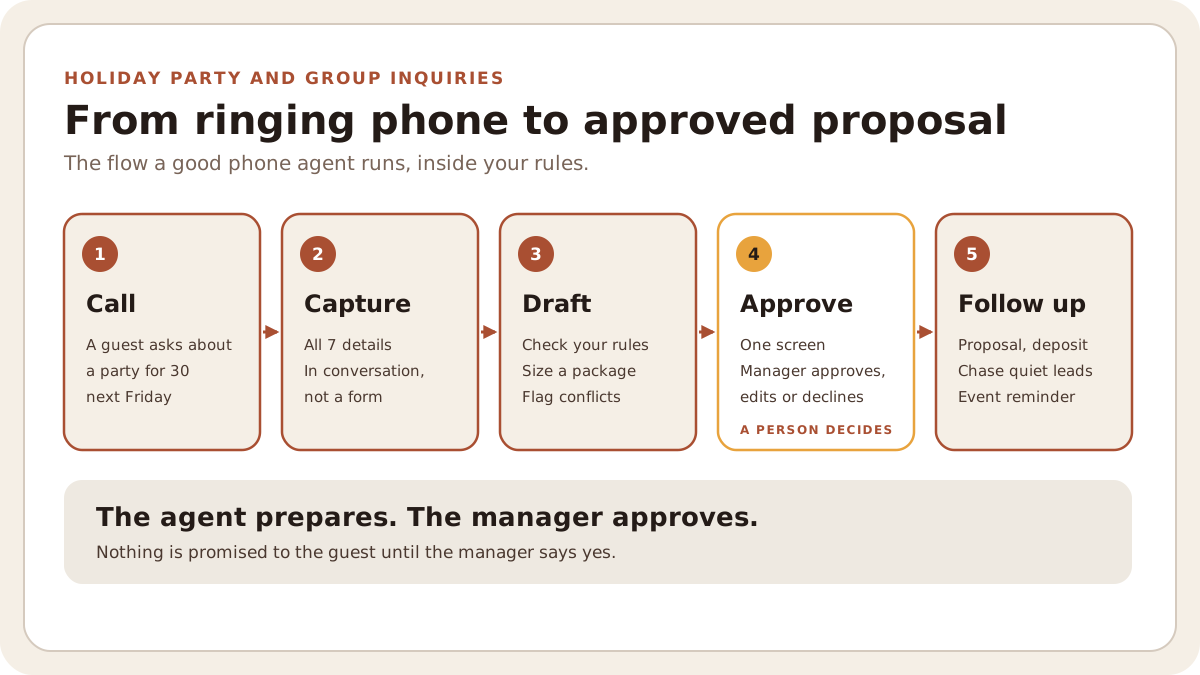
Capture is the low bar. A good note still leaves the manager to check the calendar, pick a package, write the proposal and chase the deposit. Most of that is checking rules the venue already has. Basic AI phone answering takes a message. A good AI phone agent does the prep, so the manager only has to decide. That is where voice AI and restaurant technology should earn their keep: moving event inquiries forward, not just answering more calls. Hold any vendor to these six behaviours.
It captures the seven details in conversation, not as a form
The caller says "about 30, maybe more if the sales team comes." A good agent hears a range, asks what the most could be, and moves on. It fills the gaps the caller left and skips what they already said.
It checks your rules before anyone is promised anything
Minimums, room capacity, blackout dates. If the caller wants the back room for 40 and it seats 30, the agent says so and offers what fits. It never tells a caller the date is theirs. An inquiry stays an inquiry until the venue says otherwise.
It drafts a proposal sized to the headcount and budget
Thirty-five guests with a per-person budget and drinks included points to one of your packages, not a blank page. The agent drafts from your packages and prices, and flags what does not fit, like a nut allergy next to a nut-heavy menu.
It hands the manager one screen
The request, the draft and the flags, in one place. Approve, edit or decline. The manager owns the yes. The agent did the typing.
It carries the follow-through
Once the manager approves, the agent sends the proposal, answers the guest's questions, and sends the deposit or payment link. If the guest goes quiet for three days, it follows up. Before the event, it sends the reminder and checks the final headcount.
It knows when to bring in a person
A buyout for 150. A caller who wants to negotiate. An upset guest. A request outside your rules. A good agent hands these to a person with the details already written down, the same standard we set for live transfers to a person.
Shopping for restaurant tech or voice AI for bars and breweries or activity venues? Run one party call against this list. Watch where the agent stops and your manager starts.
What can you do by hand this week?
You do not need software to fix most of this before December. Start here.
- Print the intake card. Put one by every phone, including the one behind the bar.
- Set one rule for whoever answers. Get all seven, or at least a name, number and callback time.
- Pick one place every inquiry goes. One clipboard, one inbox or one channel. Not the back of a ticket.
- Write your rules on one page. Minimums by night, room capacities, blackout dates and deposit terms.
- Build two or three packages with a per-person price. Quoting a package is faster than building a menu on every call.
- Set a callback standard. Same day before close is a fair goal in December. Each morning, call back anything missed first.
Holiday season rewards the venue that calls back first with a real answer. The seven details get you there. To hear what a party call like this sounds like with TastyVox, book a fit call.
Last updated: November 11, 2026.
How this was researched
This guide draws on how group and holiday party inquiries reach venues by phone and one cited industry survey. The seven details, the phone-agent standard and the hand checklist are editorial guidance, not results from customer data.
Want to hear what this sounds like in practice?
Listen to a demo call with a real restaurant menu. No commitment, no sales pitch.
Frequently asked questions
What should I ask someone calling to book a holiday party?
Ask for seven details: the date and a backup date, a headcount range, the budget per person or in total, the kind of space or activity, food and drink needs including allergies, who makes the final decision and by when, and the best number, email and time to call back.
Should staff quote prices on the first call?
Only prices that are already written down, like package prices and room minimums. Anything custom should wait for the manager. Saying "the back room has a minimum on Fridays, and our events lead will confirm" sets expectations without promising the date.
What is the difference between an inquiry, a hold and a booking?
An inquiry is a guest asking about a date. A hold sets the date aside for a short time while they decide. A booking is confirmed when the venue accepts it and any deposit is paid. Keep them separate so nobody thinks a date is locked when it is not.
How fast should a manager call back event inquiries and group bookings?
As fast as your team can reliably manage. Same day is a fair standard in December. Group callers often contact more than one venue, so a clear answer early gives them a reason to stop looking. Ask for a callback window on the first call so the first try connects.
What if the caller does not know the headcount or budget yet?
Take a range and a ceiling. "Twenty to forty people, with a per-person limit" is enough for a manager to suggest a space. If they truly do not know, write that down and ask when they will. That becomes the callback time.
What should an AI phone agent do with a holiday party inquiry?
More than basic AI phone answering. It should capture the seven details in conversation, check the request against the venue's minimums, capacity and blackout dates, and draft a package sized to the headcount and budget. Then it hands the manager one screen to approve, edit or decline. After approval, it sends the proposal, the deposit or payment link and the reminders.
See how TastyVox sounds with your menu.
Book a 20-minute call and we'll walk through how it works for your specific restaurant.